In 2015, the Sustainable Development Goals (SDGs) were set by the United Nations General Assembly, one of the six principal organs of the United Nations (UN) [1][2]. These 17 goals intended to be achieved by 2030.
Today, I’m going to talk a little about Goal 10—Reduced Inequalities.
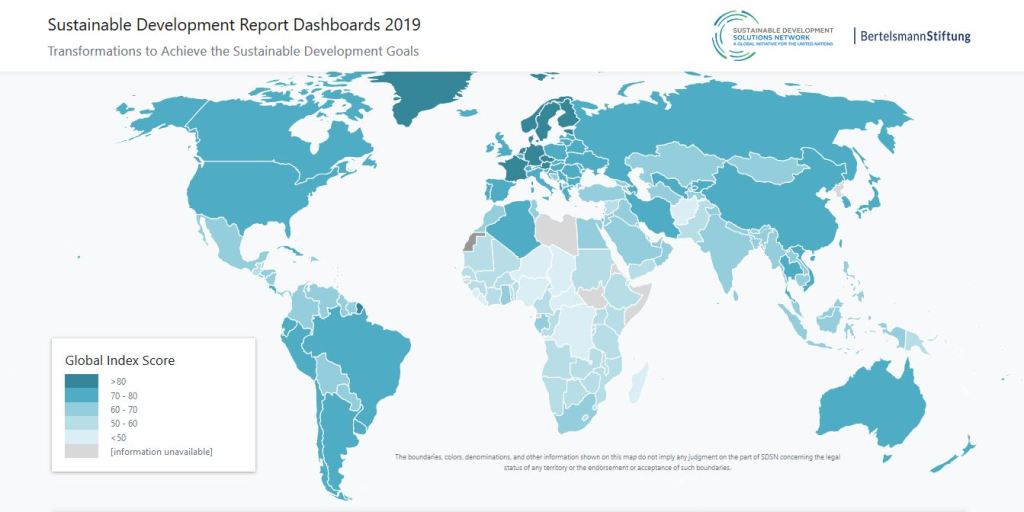
Figure 1 World map showing countries that are closest to meeting the SDGs (in dark blue) and those with the greatest remaining challenges (in the lightest shade of blue) in 2018. CC BY-SA 4.0
Backgrounds
The international community has made significant progress on lifting the poor out of poverty, especially those who live in the least developed countries. In 2016, over 64.4% of products exported from these countries faced zero tariffs, which improved their competitiveness in the world[3].
However, inequality persists and large disparities still remain. Evidence shows that children in the poorest 20 percent of the populations are still up to three times more likely to die before their fifth birthday than children in the richest regions. More seriously, with the protectionism prevailing, the products from these countries seem much harder to export[3].
I think most of us are rich, but we need to look back to those who need help, huh?
The poor in Hong Kong
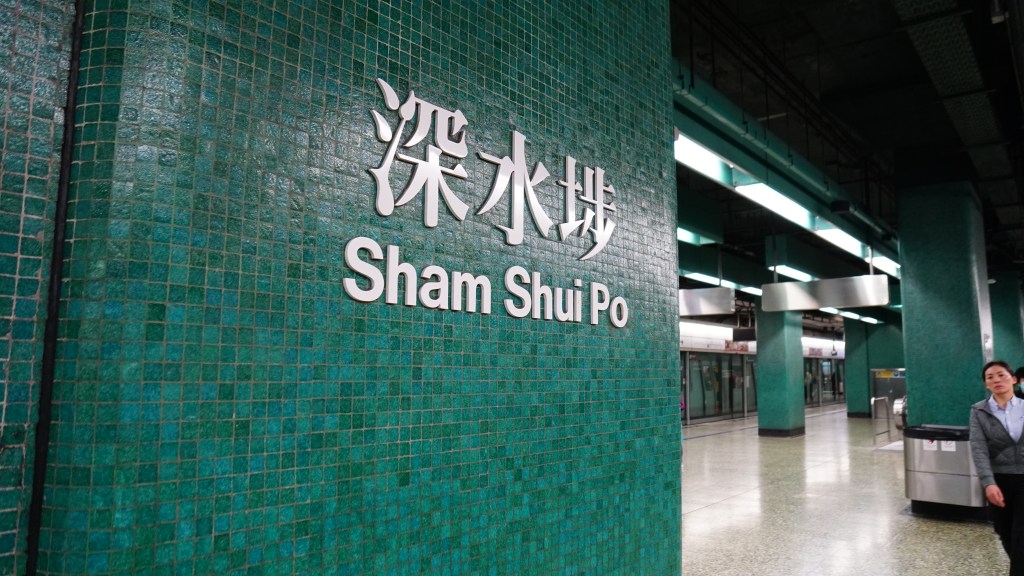
Figure 2 MTR Sham Shui Po Station
When we talk about the poor in Hong Kong, a place often comes to our mind—Sham Shui Po, as well as another word—subdivided flat.
Because of the fire taken place in Shek Kip Mei in 1953, Hong Kong government began to build public rental housing for those who lost their home [4]. According to the housing figures published by transport and housing bureau in 2019, 29.1% of Hong Kong citizens live in public rental housing [5].
Unfortunately, there are still a lot of people waiting to live in public rental housing. It is reported that the average waiting time for moving into public rental house has increased to 5.5 years [6]. So, the families who cannot afford the private flat have to live in subdivided units, or even cage home.
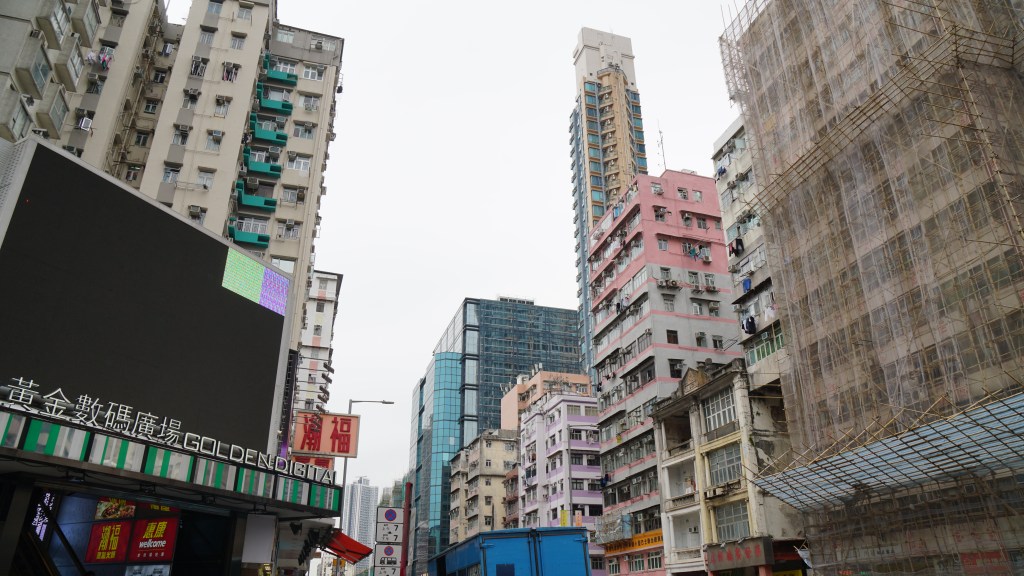
Figure 3 The tall buildings are built among the old ones in Sham Shui Po
On the other hand, new tall building is being built among the shabby ones, which seems ironic, and raise a question: Why is there such a big gap?
Actually, the wage distribution in Hong Kong is based on education level. A job which requires high education are often attached with high salary. Instead, the jobs that do not require high education, such as safe guard and waitress, will be paid much less. In order to survive, they have to work for more than 70 hours per week to earn extra benefits, or get two jobs at the same time.
I have asked the safe guard in my estate during the fiercest struggle last November. She said there were no bus services at that time, and she had to take MTR for more than an hour to go for work. That’s too hard for them!
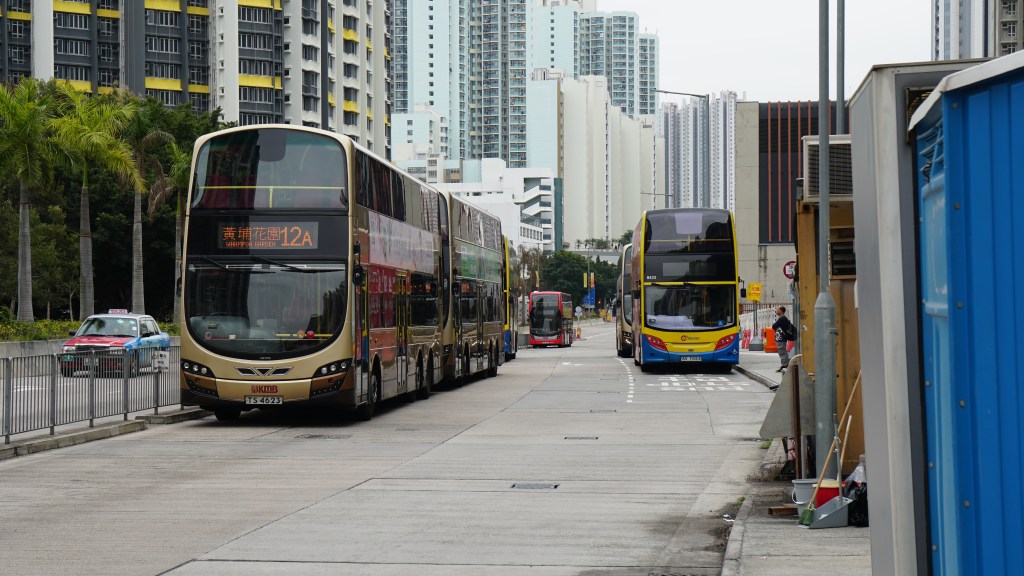
Figure 4 Cheung Sha Wan bus terminal. Most of the bus drivers in Hong Kong have to work for more than 10 hours per day for their families to survive. They have no choices but to rest in the shack shown in the right side of the photo.
The income gap in China
The salary is also proportional to education level that the job requires in mainland China. So, most of the senior students are likely to submit their resumes to finance companies, even if they do not major in the related majors.
Well, let’s change another perspective to see the inequality inside the country.
Here is an example. Just compare the salary of the same job—AI engineer, in different regions. In Hong Kong, you can earn 18,000 RMB on average per month, while in the big cities inland, such as Beijing and Shanghai, you are able to earn this amount, but you have to work more than 60 hours per week to achieve that. Things are even worse in smaller cities, where you will earn no more than 14000 RMB for salary, usually accompanied with no-paid overtime work.
As a result, an increasing number of people are likely to rush to big cities to hunt for a job, and even the vacancy of a deliveryman could be competitive.
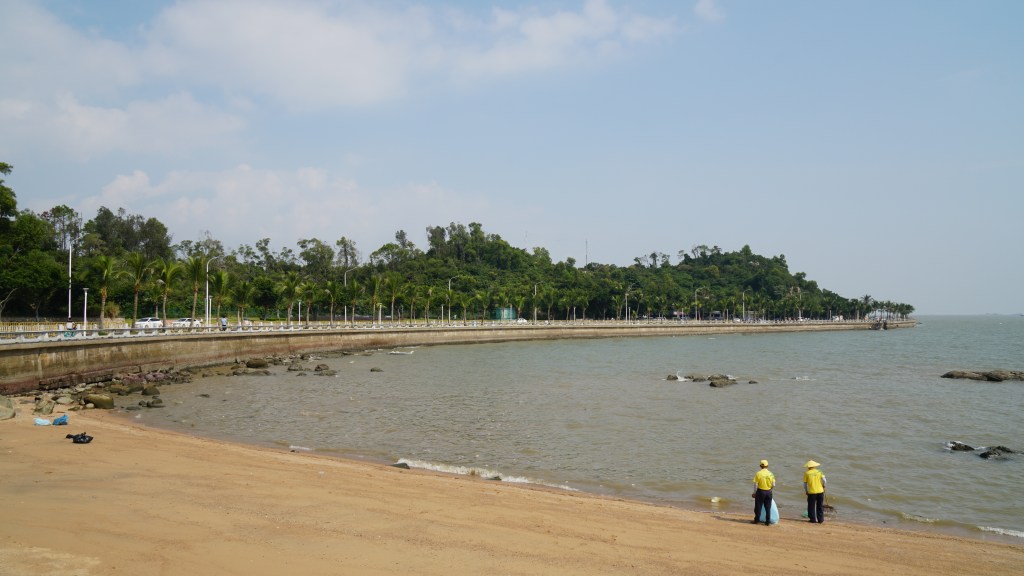
Figure 5 Sanitation workers cleaning up hard on the beach in Zhu Hai
What can we do?
Seems we can do something to alleviate these problems. We can comment the salary of our companies on a comment site, or write a blog to describe your salary situation
However, these cannot eradicate the problem. This issue needs to be addressed at the government level. Here I just give several suggestions.
- Reduce the land price. As we all know, nothing can be done without land. These days, the bosses are not likely to rise salary for the employees for the rent pressure, especially for the small companies as well as self-employed business. Reducing the rent may help them reduce the pressure on operation and give more salaries to the employees.
- Give more chances to the poor on better education. Nowadays, we are not able to get good grades in college entrance examination only relying on our school. We have to take after-school lessons or take tutoring classes to learn better. Unfortunately, the students in undeveloped regions do not have the chance and the money to enhance themselves. The education policies should lean towards the poor, or they will never have the chance to become rich.
- Reduce tax rates for the poor. This can reduce their burden and increase their income. One of the effective ways is to implement progressive taxation to redistribute the wages of all members in society.

Figure 6 Glassdoor is one of the most popular job-related websites in the world, where you can check the reviews of a company.
Thanks for reading my blog! Please feel free to discuss these issues with me.
References
[1] “United Nations Official Document”. www.un.org.
[2] United Nations General Assembly – Wikipedia https://en.wikipedia.org/wiki/United_Nations_General_Assembly
[3] Reduce inequality within and among countries – United Nations Sustainable Development https://www.un.org/sustainabledevelopment/inequality/
[4] Public housing in Hong Kong – Wikipedia https://en.wikipedia.org/wiki/Public_housing_in_Hong_Kong
[5] Housing in Figures 2019 https://www.thb.gov.hk/eng/psp/publications/housing/HIF2019.pdf
[6] 公屋申請數目和平均輪候時間 https://www.housingauthority.gov.hk/tc/about-us/publications-and-statistics/prh-applications-average-waiting-time/index.html
 Welcome to Vigo Bay!
Thanks for your sharing on the view of inequalities. I agree with you that receive better education is one of the best way for the poor to change their destiny. Since we are studying in Hongkong, we hear of the bad situation of the poorest residents more or less, your article gives me a more comprehensive understanding on their life, and I understand there is still a long way to go to solve the inequalities.
赞赞
Thanks for your comment! As what you have said, there are still a lot of people in poverty in Hong Kong, and it should be a long way to make them get rid of povety.
赞赞
The gap between rich and poor has always been a big international problem. You gave specific examples to let me understand the wealth gap around the problem. The causes of inequality are many and complex, and reducing inequality will take a long time. Thanks for sharing.
赞赞
Thanks for your appreciation! We still have a long way to go to reduce the poverty.
赞赞
I agree with your idea. The gap between rich and poor is always a great international issue. Examples and references you gave are absolutely enable me to have a better understanding of it.
赞赞
Thanks for your high appreciation, and the people all over the world should work together to reduce poverty.
赞赞